護王神社の亥子祭(いのこさい)2025|平安時代の「玄猪の式」を再現する伝統行事
投稿日: 2025年11月01日
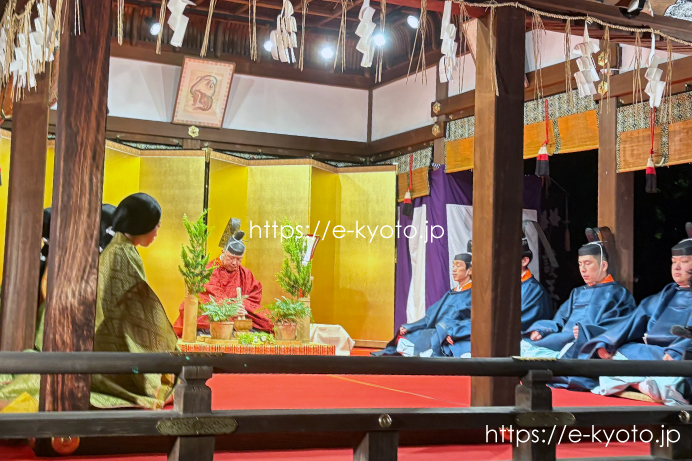
11月1日、今日は夕方から護王神社で行われた亥子祭(いのこさい)に行ってきました。護王神社は京都御苑の西に位置する神社で、「猪の神社」として知られています。境内には狛犬の代わりに狛猪像があり、猪にまつわるものがたくさん見られます。
そんな護王神社で毎年11月1日に行われるのが「亥子祭」です。この祭は、平安時代に御所の年中行事として行われていた「玄猪の式(げんちょのしき)」を再現したものなんです。玄猪の式とは、旧暦10月の亥の日に、無病息災と子孫繁栄を祈って天皇自らが亥の子餅を作り、皆に振る舞ったという儀式。その伝統を今に伝えているのが亥子祭なんですね。
夕方17時から神事が始まり、17時30分からは拝殿で儀式が執り行われました。儀式には、華やかな平安装束を身にまとった五人の奉仕女房が登場。拝殿には奉仕女房のほか、式司(しきじ)や式員が所定の位置につき、厳かな雰囲気の中で儀式が進行します。奉仕女房がお餅の材料を運び込み、式司が餅をつく所作を行い、出来上がったお餅の一部を本殿に供え、残りを御所に献上します。その後、一行は隊列を組み、御所へとお餅を献上しに向かいます。
今日は夕方前に一時的に雨が降りましたが、その後は月も見えるほどの晴れ間が広がり、まさにお祭り日和。やや肌寒い気温の中、真っ暗な京都御苑を通り抜け、御所への献上を終えて護王神社へと戻ってきました。
戻ってからは、境内で実際に亥子餅づくりが行われ、出来た亥子餅が参拝者にも振る舞われました。これからどんどん寒くなっていく時期を前に、無病息災を願っていただく亥子餅は、素朴でやさしい味わい。心も体も温まるお祭りでした。
Inoko Festival at Goō Shrine — Recreating a Heian-Era Court Ritual Honoring the Boar
On November 1, I visited Goō Shrine in the evening to see the Inoko Festival. Goō Shrine is located just west of the Kyoto Imperial Palace and is affectionately known as “the Shrine of the Boar.” Instead of guardian lion-dogs, the shrine grounds feature statues of guardian boars, and you can find boar motifs everywhere you look.
The Inoko Festival, held every year on November 1, recreates an ancient court ceremony from the Heian period called the Gencho no Shiki (玄猪の式). In this imperial ritual—originally performed on the “Day of the Boar” in the tenth month of the lunar calendar—the emperor himself would make Inoko-mochi (rice cakes shaped like boars) to pray for good health and prosperity, and then share them with the court. Goō Shrine preserves this Heian tradition even today.
The festival began with a Shinto ritual at 5:00 p.m., followed by the main ceremony in the worship hall at 5:30. Five attendants dressed in elegant Heian-style court garments appeared, joined by officiants and attendants who took their formal positions within the hall. The ceremony unfolded solemnly: the attendants carried in the ingredients for the rice cakes, the ritual master mimed the act of pounding the mochi, and a portion of the finished rice cakes was offered to the shrine’s deity while the rest was ceremonially presented to the Imperial Palace. Afterward, the procession made its way through the dark Kyoto Imperial Gardens to deliver the offering.
Earlier in the afternoon, a light rain had fallen, but by evening the sky had cleared, revealing a bright moon—perfect festival weather. The cool air and the sight of the attendants walking solemnly through the shadowy grounds created a mysterious and beautiful atmosphere.
Upon returning to the shrine, the making of Inoko-mochi was demonstrated in the courtyard, and freshly made rice cakes were offered to visitors. As the nights grow colder, tasting the warm, simple sweetness of the Inoko-mochi while praying for good health felt like the perfect way to welcome the winter season. It was a small yet heartwarming festival that truly lifted my spirits.