小雨の中の奉納狂言。わら天神・六勝神社の秋季大祭へ
投稿日: 2025年10月26日
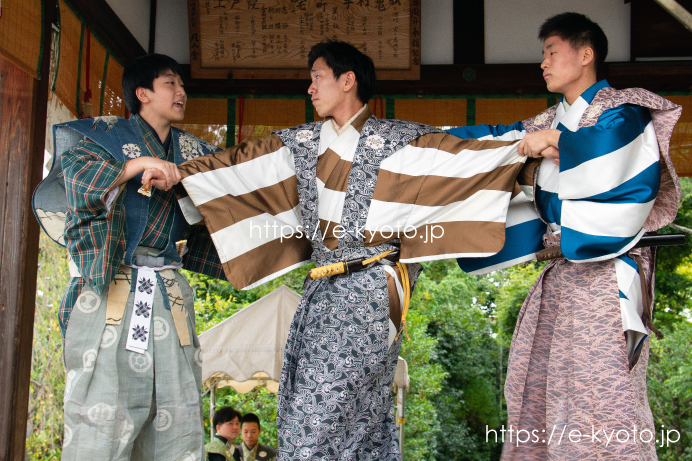
10月26日、北区衣笠にある敷地神社を訪れました。この神社は安産の神として知られ、授かった藁(わら)の護符に節があれば男の子、なければ女の子が生まれるという信仰から、通称「わら天神」と呼ばれています。
今日は小雨の降る中、そのわら天神境内にある六勝神社の秋季大祭へ。朝から祭典が行われていたようですが、私は午後2時から始まる茂山千五郎社中による奉納狂言を目当てに神社を訪れました。
狂言は神楽殿で上演され、「翁」「口真似」「清水」の三演目が披露されました。「翁」は古典的な所作が中心で難しかったものの、「口真似」と「清水」は言葉も聞き取りやすく、内容も親しみやすかったですね。観客の中には子どもの姿もあり、笑い声が何度も響いていました。
その後、居合術の奉納も拝見し、無料接待の抹茶と和菓子を頂いて、雨の中を帰路につきました。伝統芸能を間近で観る貴重なひととき、たまにはこうした文化に触れるのも良いものです。
Visit to Wara Tenjin Shrine and the Autumn Festival of Rokushō Shrine
On October 26, I visited Shikichi Shrine in Kinugasa, Kyoto’s Kita Ward. The shrine is widely known as a guardian deity of safe childbirth. Because of a local belief that a straw charm (wara-gofu) with a joint predicts the birth of a boy, and one without predicts a girl, the shrine is affectionately called Wara Tenjin (“Straw Tenjin”).
Despite the light rain, I went to the autumn festival of Rokushō Shrine, located within the Wara Tenjin grounds. The rituals had begun earlier in the morning, but I arrived in time for the kyōgen (traditional comic theater) performance by the Shigeyama Sengorō troupe, which started at 2 p.m.
The kyōgen took place on the Kagura stage and featured three plays: Okina, Kuchimane, and Shimizu. Okina focused on formal, classical movements and was rather profound, while Kuchimane and Shimizu were more accessible, with clear dialogue and humorous stories. Among the audience were several children, and their laughter echoed through the shrine grounds more than once.
After the performance, I also watched a demonstration of iaijutsu (Japanese sword-drawing art), then enjoyed a complimentary bowl of matcha and a traditional sweet before heading home through the rain. It was a rare and precious opportunity to experience Japan’s traditional performing arts up close—a refreshing reminder of the richness of Kyoto’s culture.