京都の伝統行事「烏帽子着」木野愛宕神社で行われる元服式を見学
投稿日: 2025年10月23日
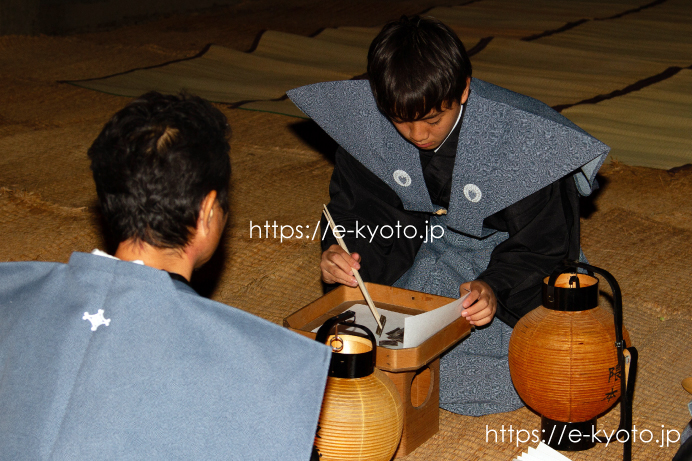
10月23日、今日は夜20時から、木野愛宕神社の「烏帽子着(えぼしぎ)」を見に行ってきました。烏帽子着は、毎年この日に行われる木野愛宕神社の祭礼の後に執り行われる神事で、16歳になった男子が大人の仲間入りをする「元服式」にあたります。
16歳の少年は裃(かみしも)姿で宮座の杯事(さかずきごと)の「響応(きょうおう)」という役を務めます。これは大人たちをもてなす役で、盃と肴を一人ずつに配り、酒を杯に酌みます。一方、大人たちはそのお返しとして祝いの謡曲を歌い、若者の成長を祝います。
叡山電鉄で出町柳駅から木野駅まで向かい、徒歩約5分。神社に着いたのは19時50分頃でした。祭礼の開始が20時だったので、ぎりぎり間に合いました。祭りが始まる前には、地域のあちこちから花火のような音が響いており、それが祭礼の合図だったようです。思った以上に大きな音で、少し驚きました。
その後、祭礼が厳かに行われ、続いて烏帽子着が始まりました。私の目にはまだ少年のように映る16歳の若者が、堂々と大人たちをもてなす姿はとても印象的で、温かい気持ちになりました。
この日の天気はよかったのですが、岩倉の夜は一段と冷え込みます。20時から始まった祭礼と烏帽子着をすべて見終えた頃には、すでに21時半を過ぎ、体が冷え切っていました。それでも、地域の若者が成長し、大人たちがそれを見守り祝う――そんな光景に触れ、寒さもどこか吹き飛ぶような思いでした。
儀式の詳しい詳細はコチラ→木野愛宕神社 烏帽子着(袴上げの儀)
Eboshi-gi at Kino Atago Shrine — Witnessing a Coming-of-Age Ritual in Kyoto
On October 23, I went to Kino Atago Shrine at 8 p.m. to watch the traditional Eboshi-gi ceremony.
This ritual takes place every year on this day, following the shrine’s annual festival. It serves as a coming-of-age ceremony (Genpuku-shiki) for sixteen-year-old boys, marking their official entry into adulthood.
During the ceremony, the sixteen-year-old participant, dressed in formal kamishimo attire, takes on the role of Kyōō in the shrine’s sakazuki-goto (cup ceremony). In this role, he graciously serves sake and small dishes to each of the adults, symbolizing respect and hospitality.
In return, the adults sing celebratory Noh chants (utai) to honor and bless the young man’s growth.
I took the Eizan Railway from Demachiyanagi Station to Kino Station, then walked about five minutes to reach the shrine, arriving around 7:50 p.m. Since the festival began at 8:00, I made it just in time. Before the ceremony started, I could hear loud, firework-like sounds echoing throughout the neighborhood — signals announcing the beginning of the festival. The sounds were much louder than I expected, and I found myself a little startled.
The festival began in a solemn atmosphere, followed by the Eboshi-gi ceremony itself. Watching a sixteen-year-old — who still looked very much like a boy to me — confidently serve and entertain the adults was deeply moving. It was a touching reminder of how communities nurture and celebrate their youth.
Although the weather was clear, the evening air in Iwakura was especially cold. By the time the ceremony and rituals ended around 9:30 p.m., my body was chilled to the bone. Yet, witnessing such a warm and heartfelt scene — where young men are embraced by their community as they step into adulthood — made the cold feel almost insignificant.