京都・大歳神社で開催「京都西山竹あかり~幻想夜2025~」へ行ってきました
投稿日: 2025年10月19日
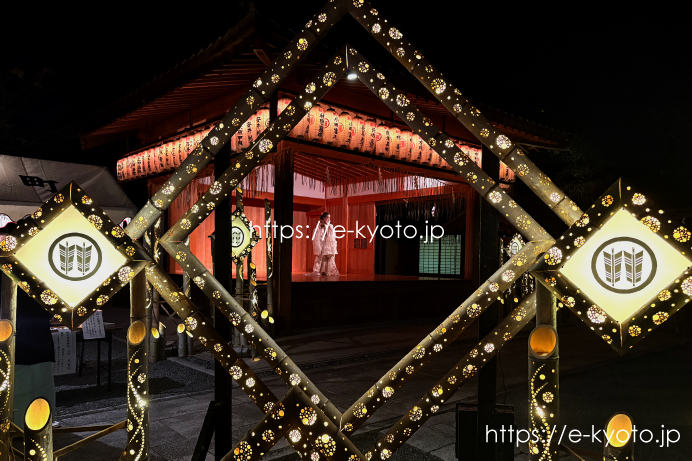
10月19日、今日は夕方から「竹」のライトアップイベントが行われている大歳神社へ行ってきました。京都の西山エリアにある大歳神社・善峯寺・楊谷寺の3社寺で開催される「京都西山竹あかり~幻想夜2025~」というイベントです。
この催しは、文化財の保存と活用の好循環をめざす文化観光プロジェクトの一環として実施されており、放置竹林を地域資源へと活かしながら、文化財の新たな魅力を発信する試みでもあります。まずは10月18日〜20日の3日間に大歳神社で開催され、その後、10月31日〜11月3日・11月8日〜9日は善峯寺、11月21日〜24日・11月29日〜30日は楊谷寺で順次開催される予定です。
この日は18時30分から笛の演奏が行われるということで、その時間に合わせて訪れました。普段は昼間しかこのあたりに来たことがなかったのですが、夜の雰囲気はまるで別世界。夕方6時にはすでにあたりは暗く、しんとした静けさが漂っていました。そんな中、境内には多くの人が集まり、竹あかりの柔らかな光が幻想的な空間を作り出していました。笛の演奏が始まると、澄んだ音色が夜空に響き、あたりの空気まで清らかに感じられるほどでした。
ちなみに、大歳神社は通称「栢大明神(かやだいみょうじん)」と呼ばれ、境内は「栢の杜(かやのもり)」とも称されています。かつてはこの一帯に多くの栢の木が生い茂っていたそうで、近年はその復活を目指して栢の植樹が進められています。今回のイベントでは、本殿の御神灯に栢の実から搾った油が使われており、電気とは違う、どこか懐かしく柔らかな明かりが印象的でした。
1時間ほど境内で幻想的な灯りと音色を楽しみ、大歳神社を後にしました。ところが、帰りのバスの最終便がすでに終了しており、阪急の駅まで1時間かけて徒歩で向かうことに。いい運動にはなりましたが、もし大歳神社へ行かれる際は、帰りの交通手段を事前に確認しておくのがおすすめです。
Kyoto Nishiyama Bamboo Lights 2025 – A Magical Night at Ootoshi Shrine
On October 19, I visited Ootoshi Shrine in the Nishiyama area of Kyoto to see a special bamboo illumination event called “Kyoto Nishiyama Take Akari – Gensouya 2025” (Bamboo Lights Fantasy Night 2025).
This event is held at three historic sites—Ootoshi Shrine, Yoshimine-dera Temple, and Yanagidani Kannon (Yōkoku-ji Temple).
The project is part of a broader cultural tourism initiative that aims to create a positive cycle of preserving and utilizing cultural heritage. By making use of abandoned bamboo forests as a local resource, the event seeks to shed new light on the cultural and historical value of these sacred places.
The first stage takes place at Ootoshi Shrine from October 18–20, followed by Yoshimine-dera from October 31–November 3 and November 8–9, and finally Yanagidani Kannon from November 21–24 and November 29–30.
I arrived just in time for a flute performance scheduled to begin at 6:30 p.m. I had only ever visited this area during the day before, but at night it felt like a completely different world. By six o’clock, darkness had already fallen, and a deep stillness filled the air.
Within the shrine grounds, soft bamboo lanterns glowed warmly, creating a dreamlike atmosphere. When the flute began to play, its clear tones echoed through the night sky, making even the air feel purified by the music.
Ootoshi Shrine is affectionately known as Kayadaimyōjin, and the shrine grounds are referred to as Kayano Mori, or “the Grove of Kaya Trees.” In ancient times, the area was filled with kaya (Japanese torreya) trees, and recent efforts have been made to replant them. For this event, oil pressed from kaya nuts was used to light the shrine’s sacred lanterns, giving off a gentle, nostalgic glow quite unlike electric light.
After spending about an hour immersed in the lights and music, I reluctantly left the shrine. However, I soon discovered that the last bus had already finished running, and I had to walk an hour to the nearest Hankyu Station. It turned out to be good exercise, but if you plan to visit Ootoshi Shrine, I highly recommend checking your return transportation in advance!